The Douglas process
Process — Douglas
We don't design the Douglas pieces. We collect them, then pour.
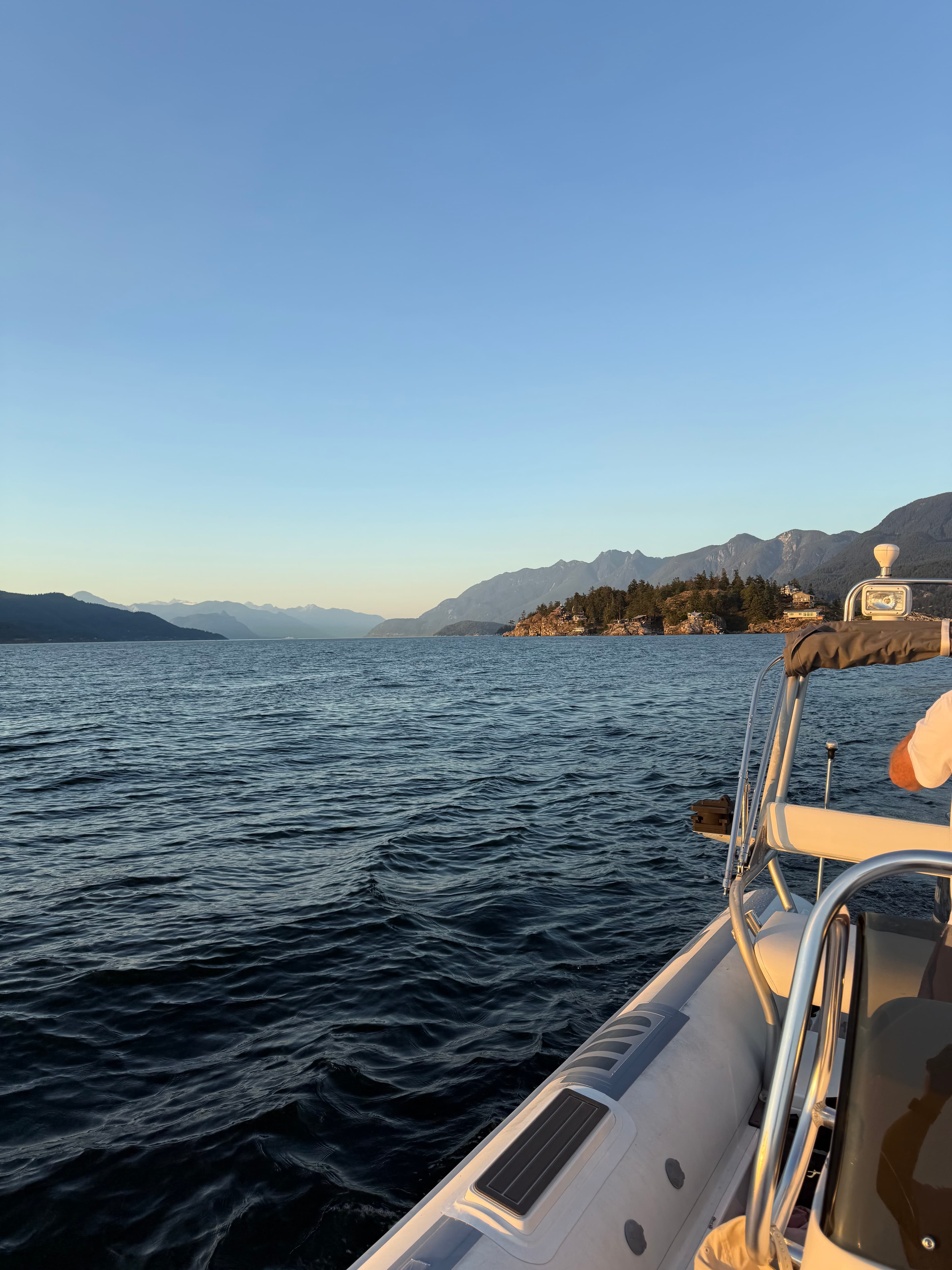
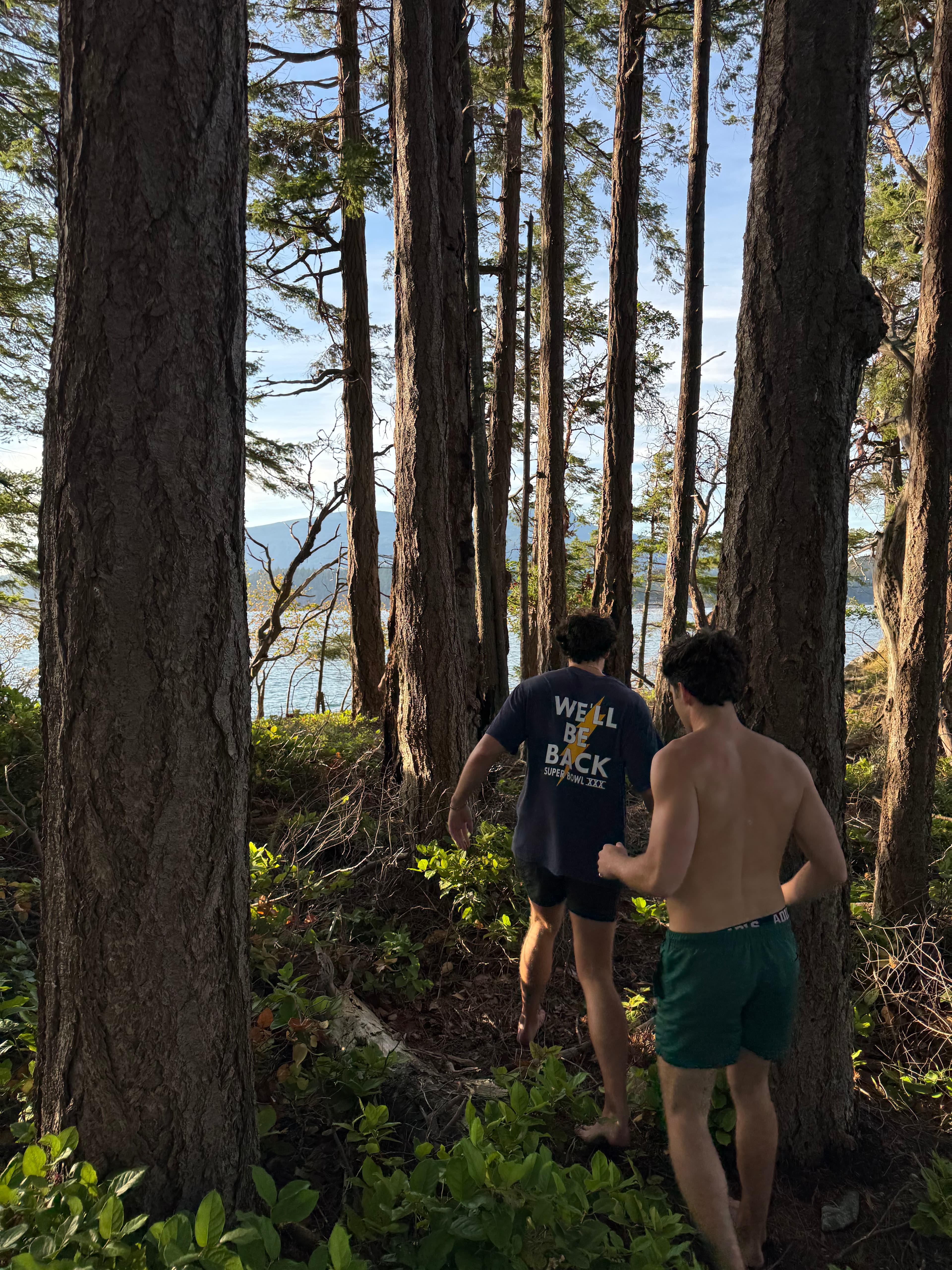
Every Douglas piece, the sconces, the towers, the columns, comes from the same walk: a boat ride when the tide chart and the weather agree, a scramble past the tide line, up into the Douglas-firs that have already fallen.
- Series
- Douglas — Sconce, Tower, Column
- Mould
- Fallen Douglas-fir bark, collected by boat on the North Shore
- Rule
- Take the bark the tree already gave up; one pour per mould
- Glass
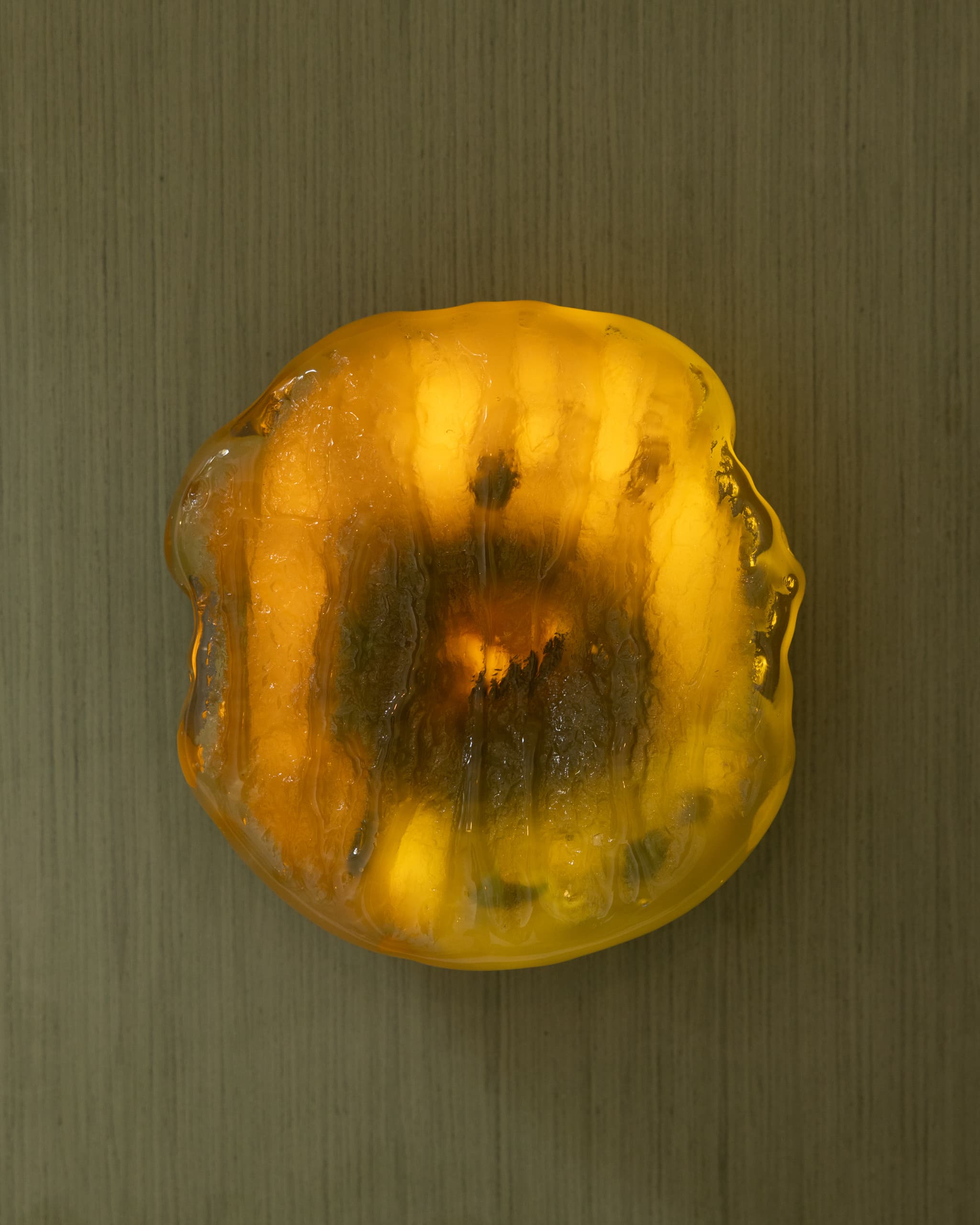
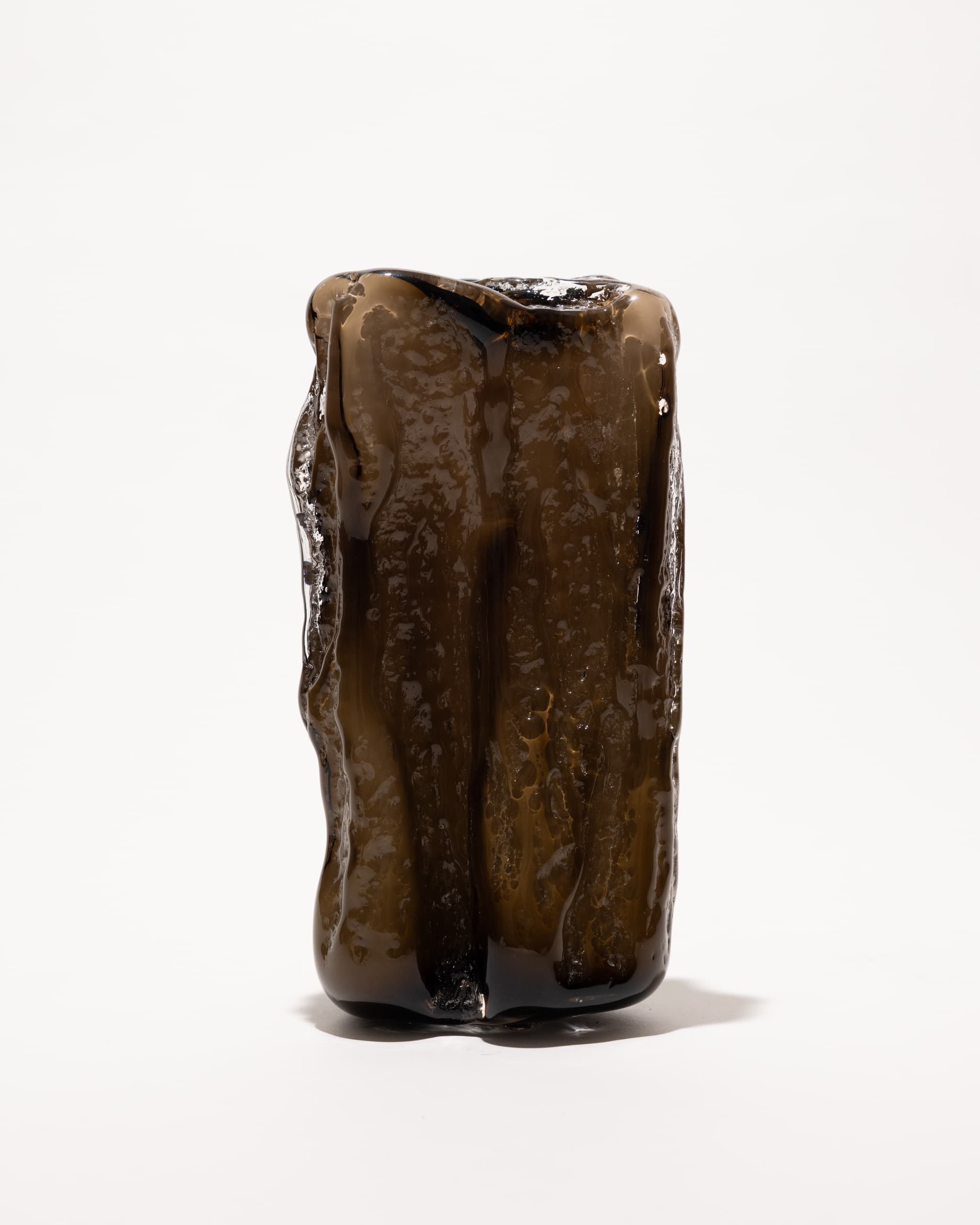
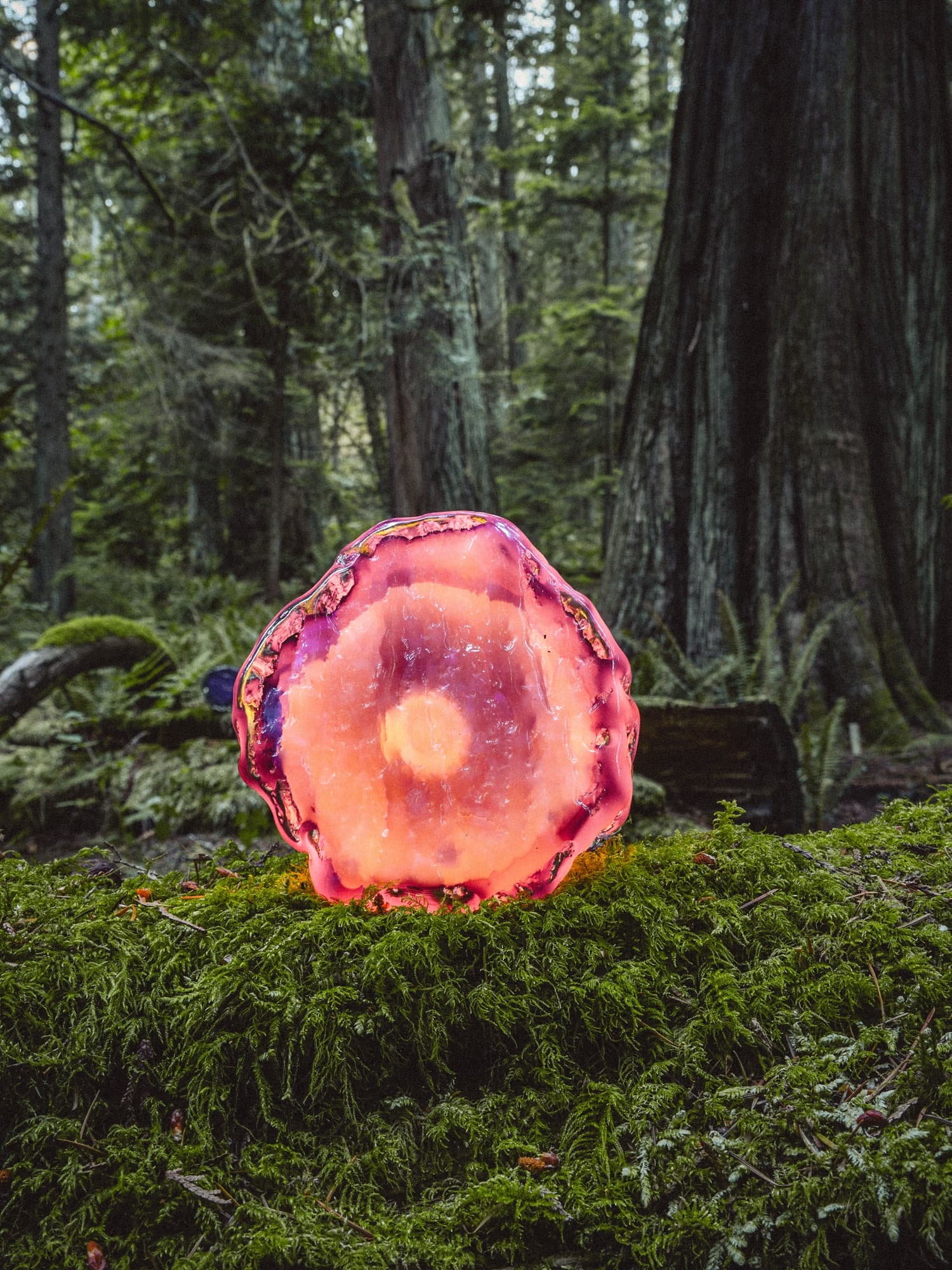
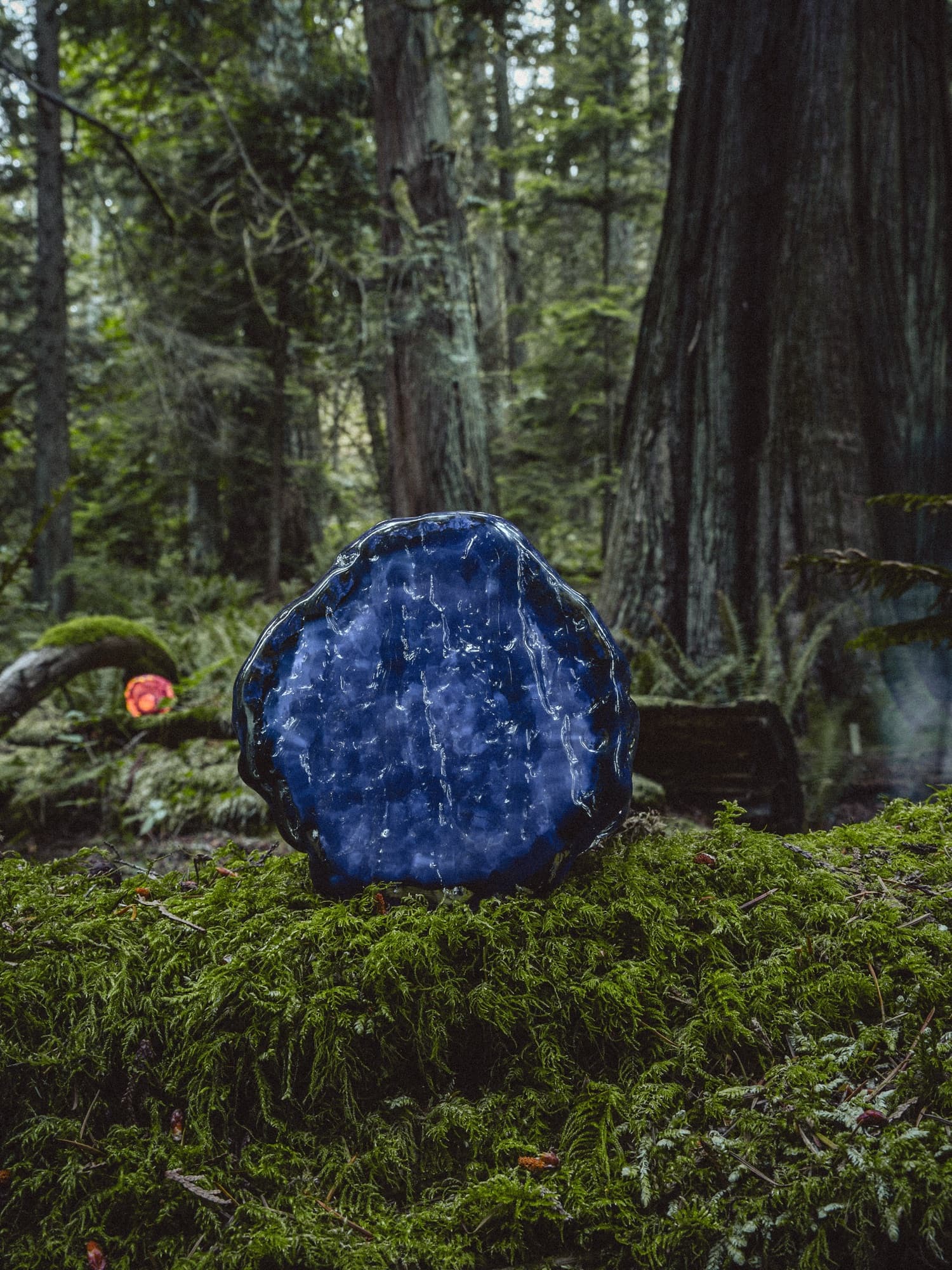
- Hand-blown, cast through the bark's grain — the texture is cast, not printed
- Light
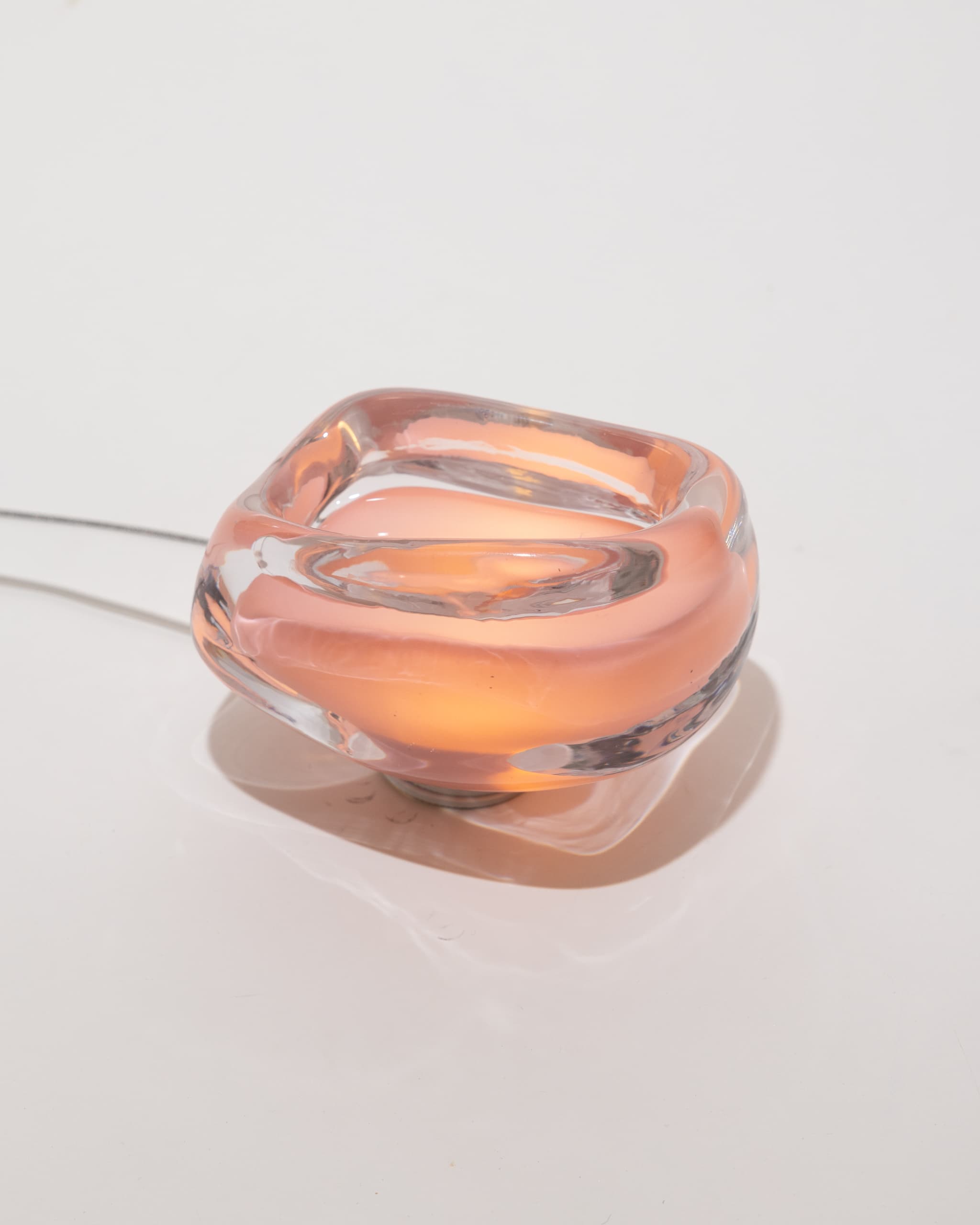
- Warm low-voltage LED, dimmable at the wall
- Edition
- One of one; the mould is ash after the pour
- Lead time
- 10–12 weeks from inquiry to delivery
- Made in
- Cast on the North Shore; finished in Vancouver
Collecting day
Field2026The rule on the water is the same as in the shop: take the bark the tree already gave up, take photographs, take nothing else. Half the days we come back empty handed. Those days count too.
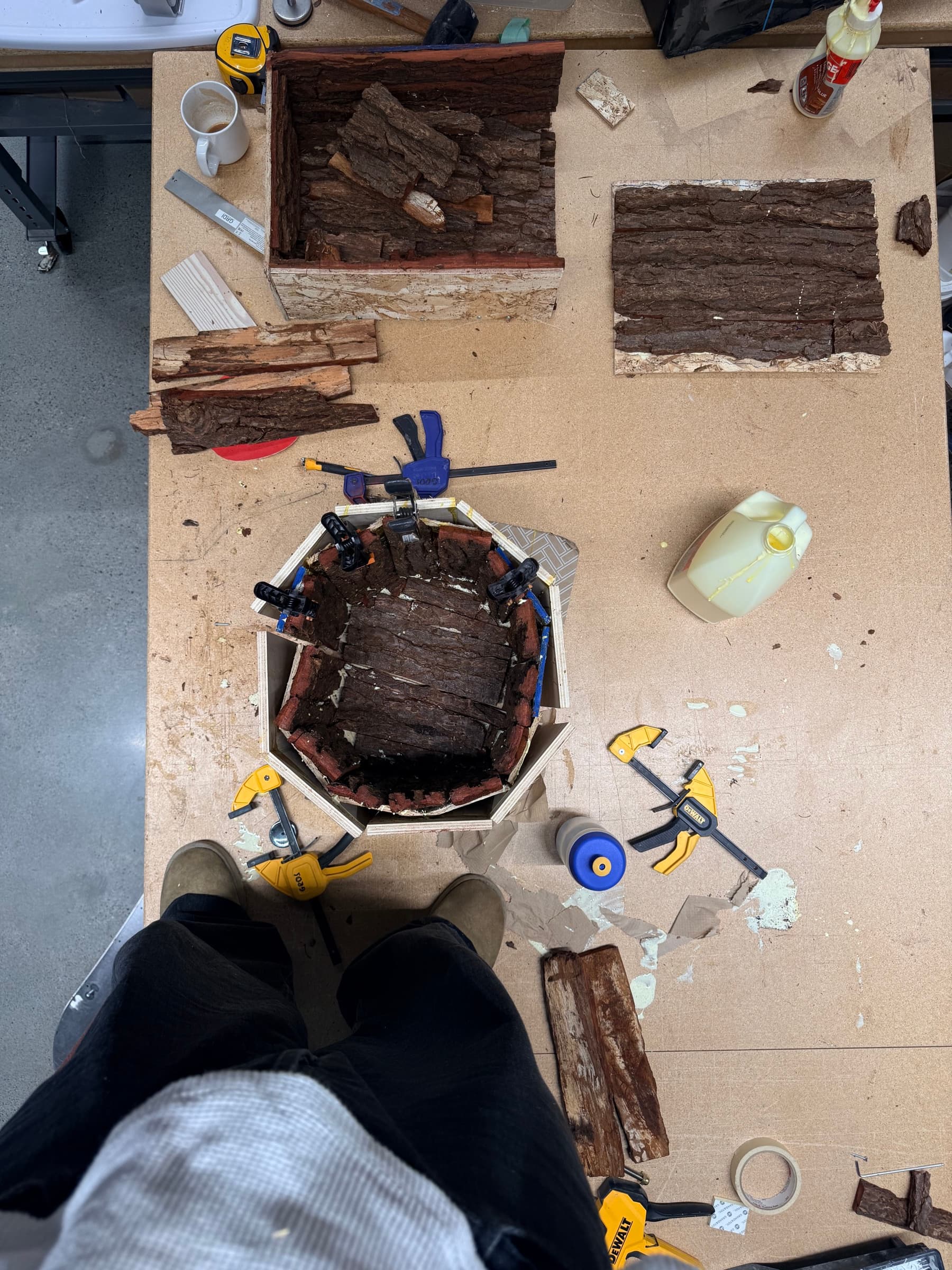
The grain
Mould2026A good length of Douglas-fir bark is a geometry no studio could draw and no factory could repeat. The ridges run long and vertical; the beetles have already done the fine work.
Night pours
Pour2026Most of the casting happens after ten, when the kiln holds the day's heat. Each length of bark is a mould exactly once: the glass goes in hot and moving, takes the grain, and the heat takes the bark. There is a moment right after the pour when the whole room smells like a beach fire. When it fades, the piece is on its own.
Finishing
Finish2026The casting happens on the North Shore; the finishing happens back in Vancouver, usually with Bo on the other side of the bench. Cords in cloth, warm low-voltage LEDs, hardware you never notice. The finishing keeps the work honest. The casting keeps it wild.
The pieces
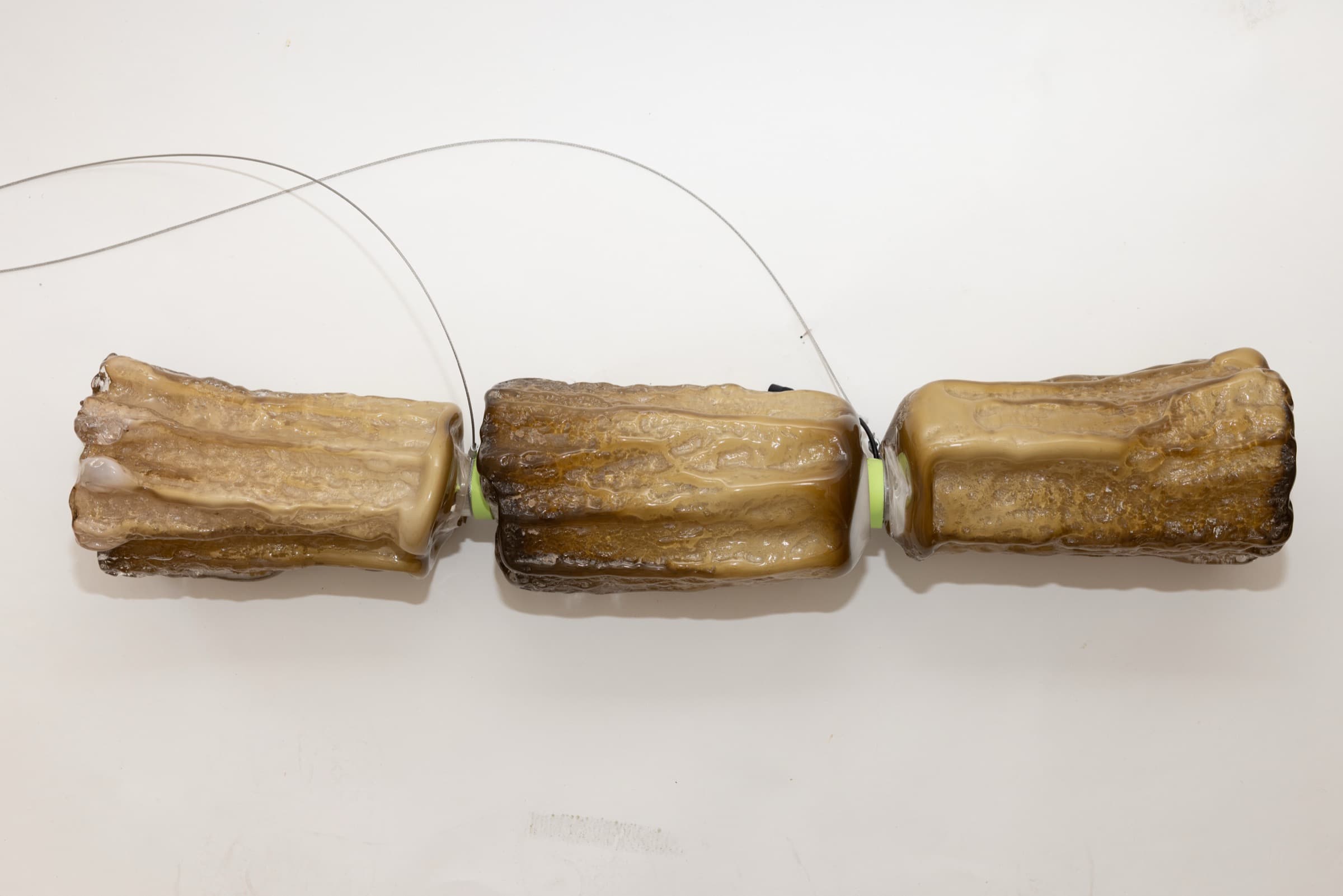
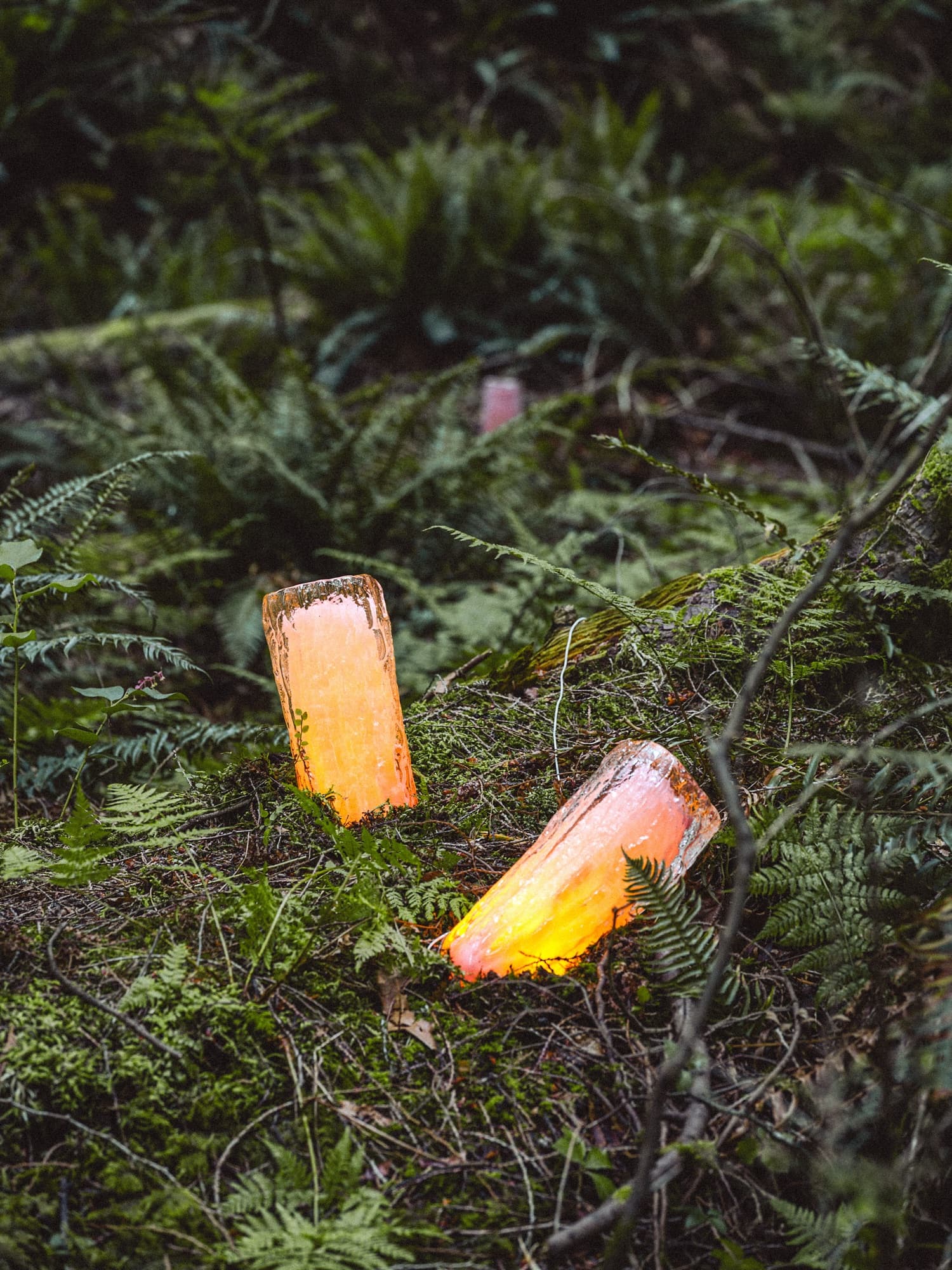
Pieces2026Sconce on the wall, tower on the floor, column standing narrow and true. The same grain, three heights.
Index
Made this way