The Barnacle process
Process — Barnacle
One plate of bark, one pour, one piece. The tree decides the rest.
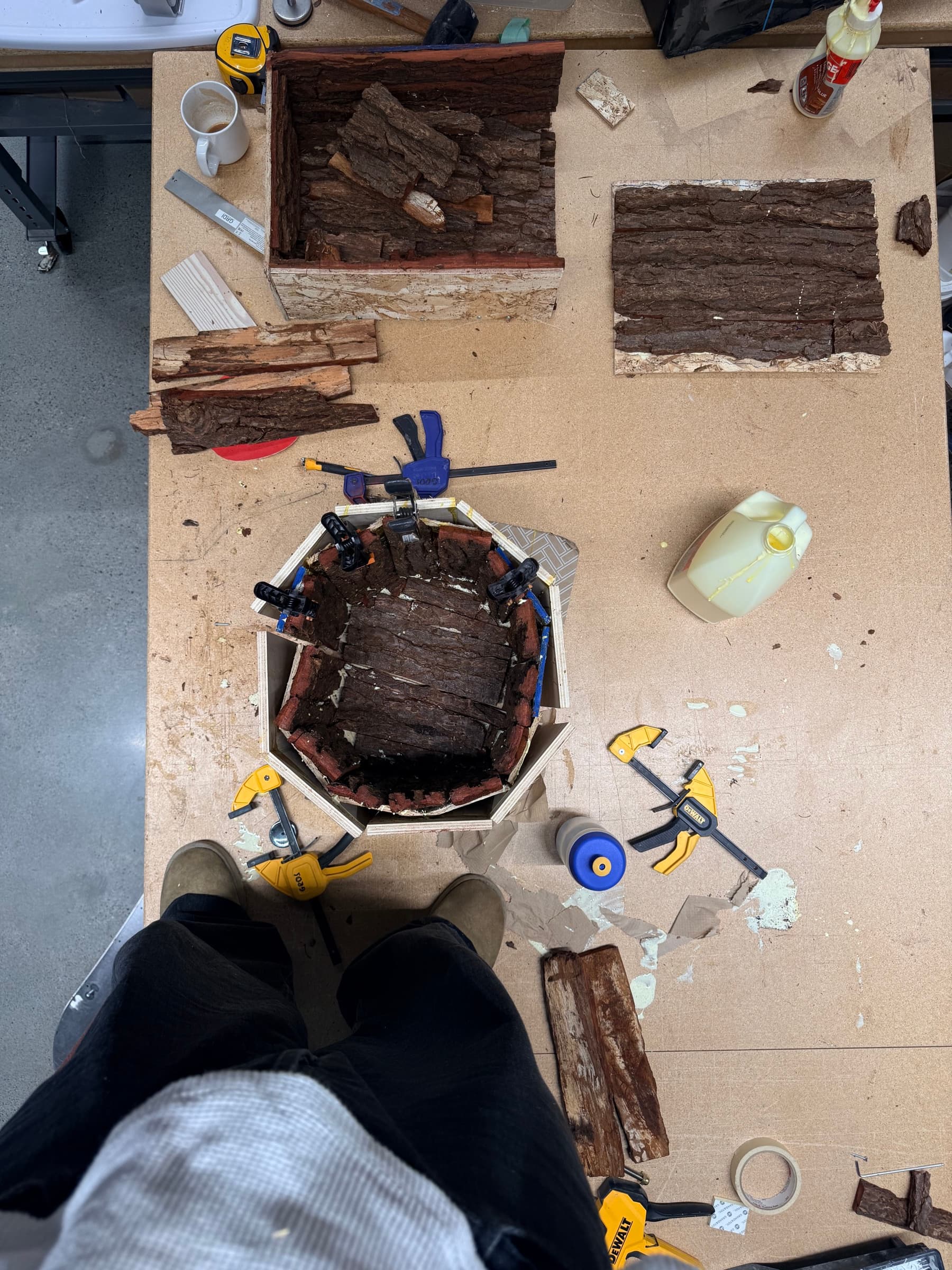
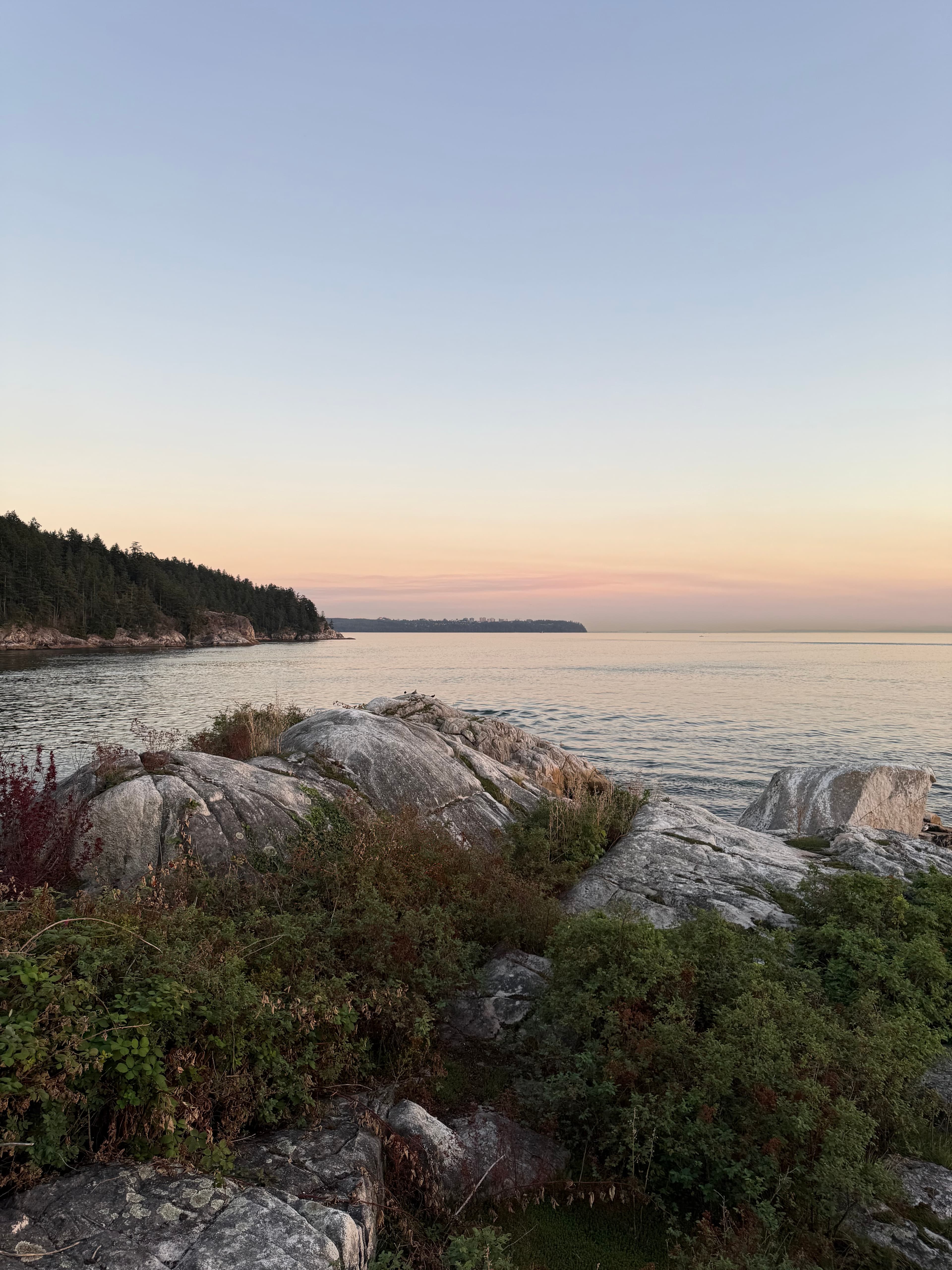
Barnacle is the piece we point to when someone asks what POGO is. It starts as a plate of Douglas-fir bark, pulled from a tree that had already come down on the North Shore. We don't carve it or smooth it. We cast straight into the thing the forest made.
- Series
- Barnacle — Stem, Table, Pendant
- Mould
- Raw natural plates; each survives a single pour
- Glass
- Hand-blown, poured at temperature into the raw mould
- Light
- Warm low-voltage LED, dimmable at the wall
- Cord
- Cloth-wrapped, semi-rigid; takes whatever set you give it
- Edition
- One of one, every piece
- Lead time
- 8–10 weeks from inquiry to delivery
- Made in
- Cast on the North Shore; finished in Vancouver
The plate
Mould2026The bark keeps everything: every ridge, every split, every channel the beetles left behind. We read each plate before we pour, sometimes with computational tools, mostly with our hands, to know where the glass will pool and where it will thin.
The pour
Pour2026Glass goes in at temperature, in motion, with seconds to find every ridge before it sets. Too cool and it skips the fine grain; too hot and it overwhelms it. The window is small and it is different for every plate.
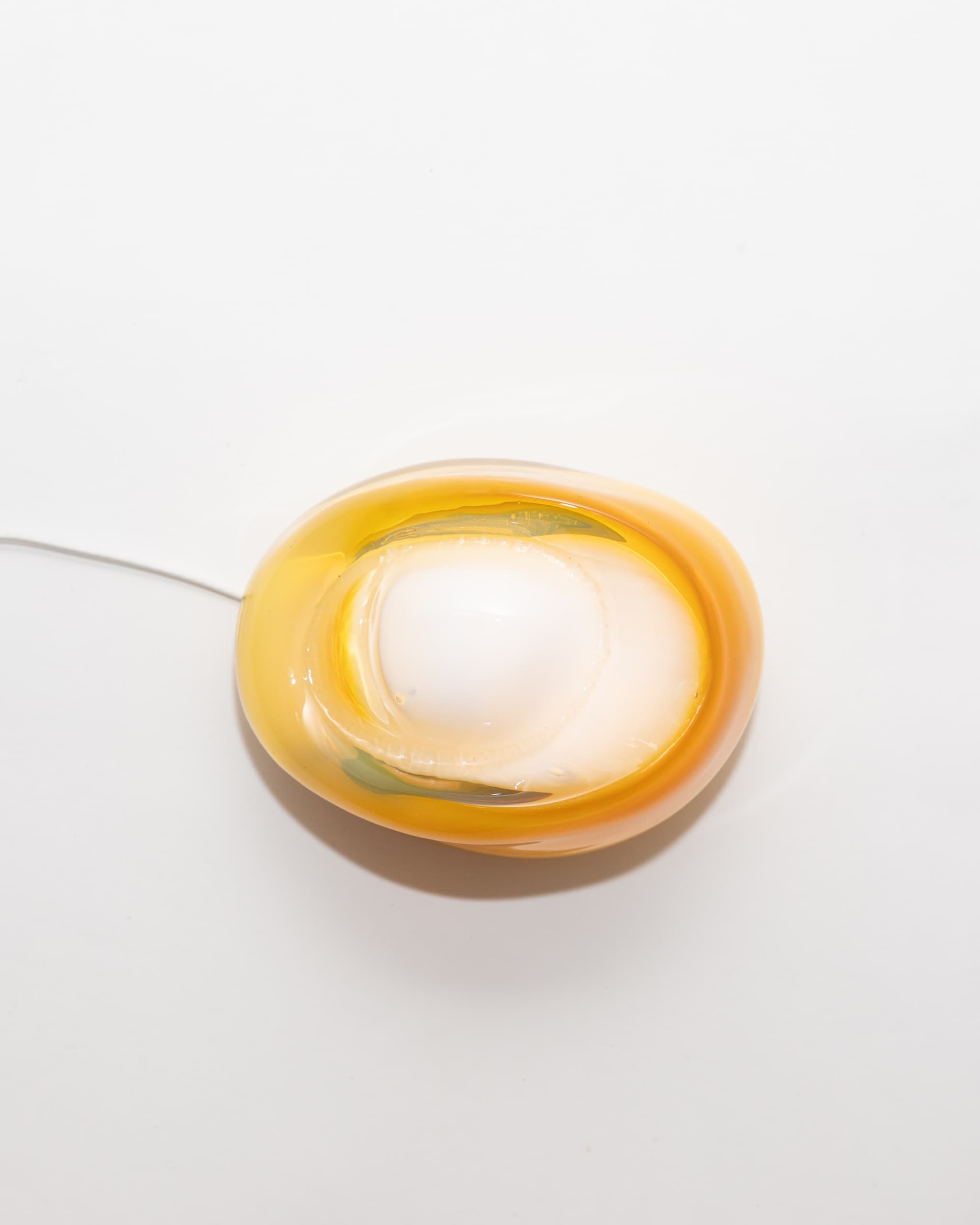
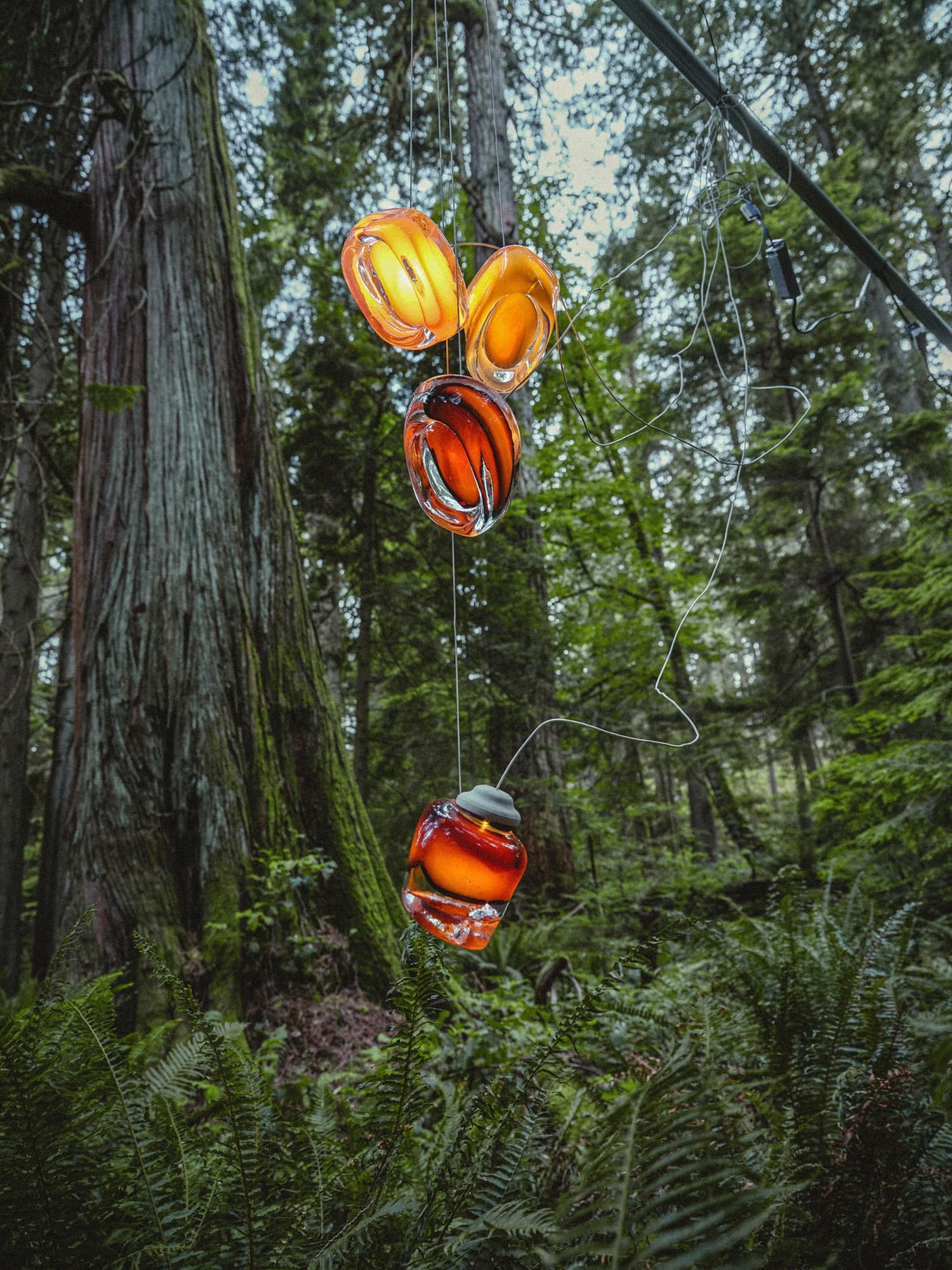
Lit, the pour gathers where the glass runs thick and falls away where it thins. The bark's texture decides which is which. That is the whole design process, and we did not do it.
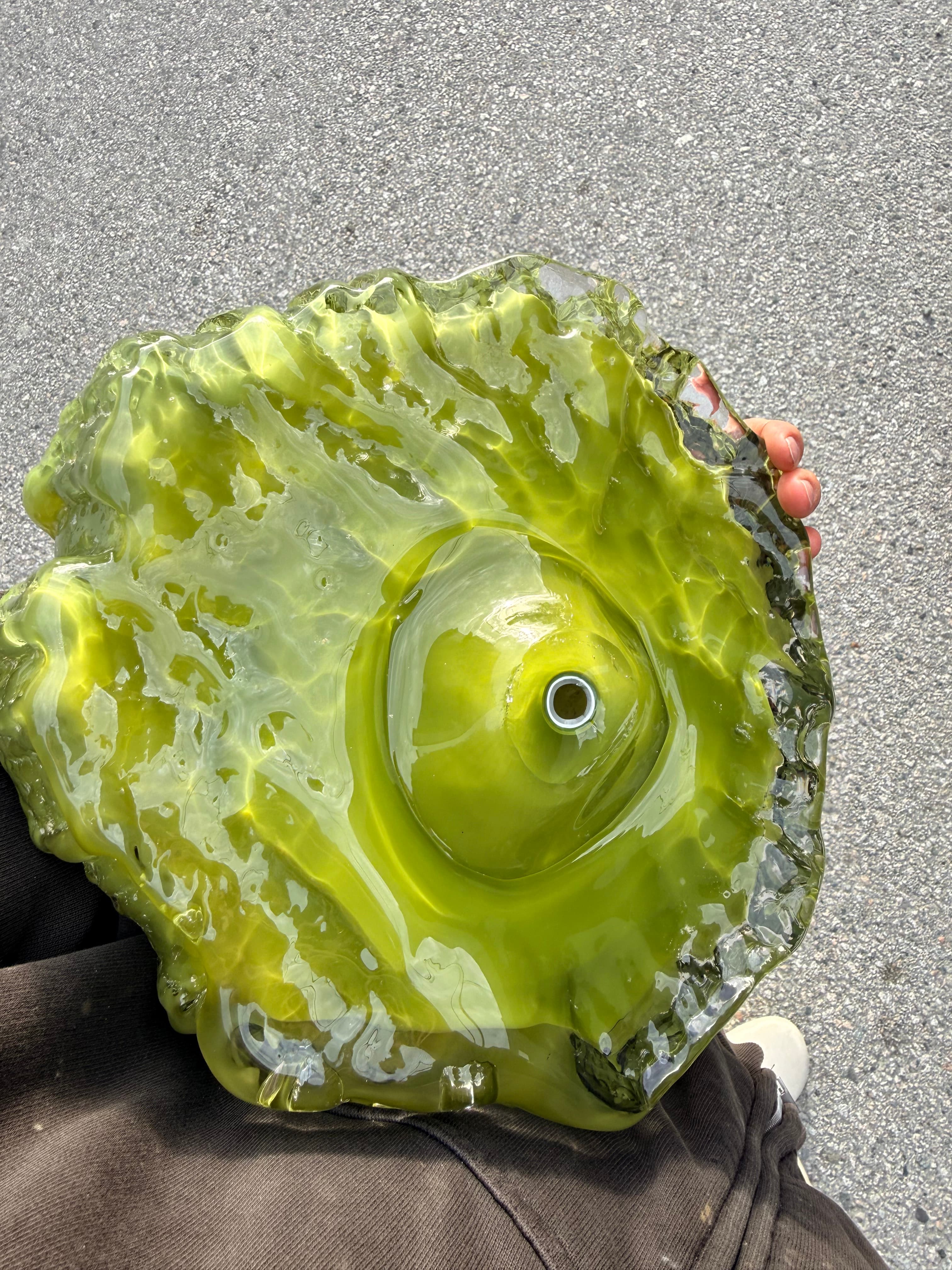
One of one
Mould2026The heat takes the mould with it. One pour, then ash and char. Nobody, including us, can ever cast the same piece twice; the swatches on the product page choose your pour, not a shelf.
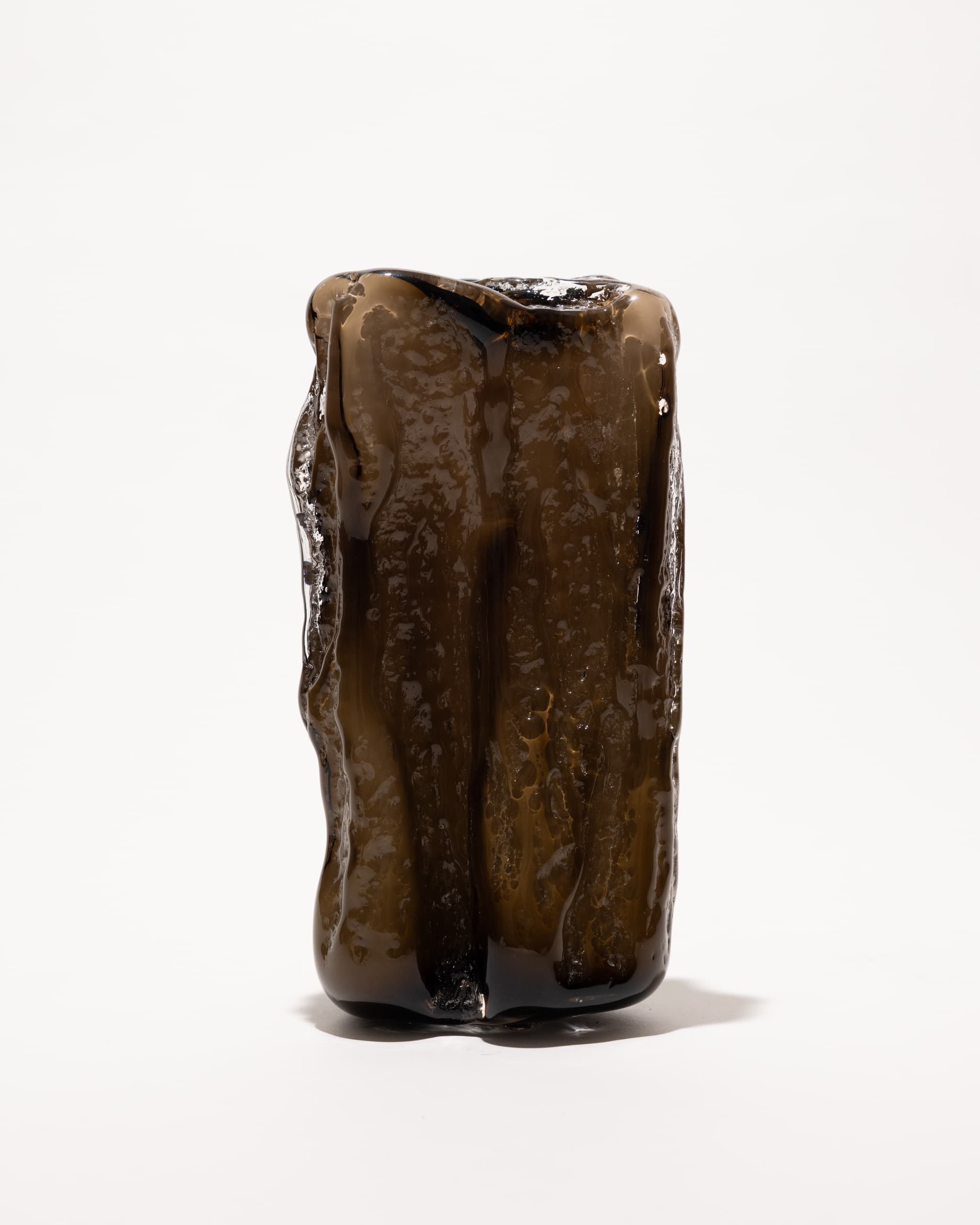
The pieces
Pieces2026Three ways the cluster lives in a room: hung on a stem, settled on a table, gathered into a pendant. Same plate logic, three attitudes.
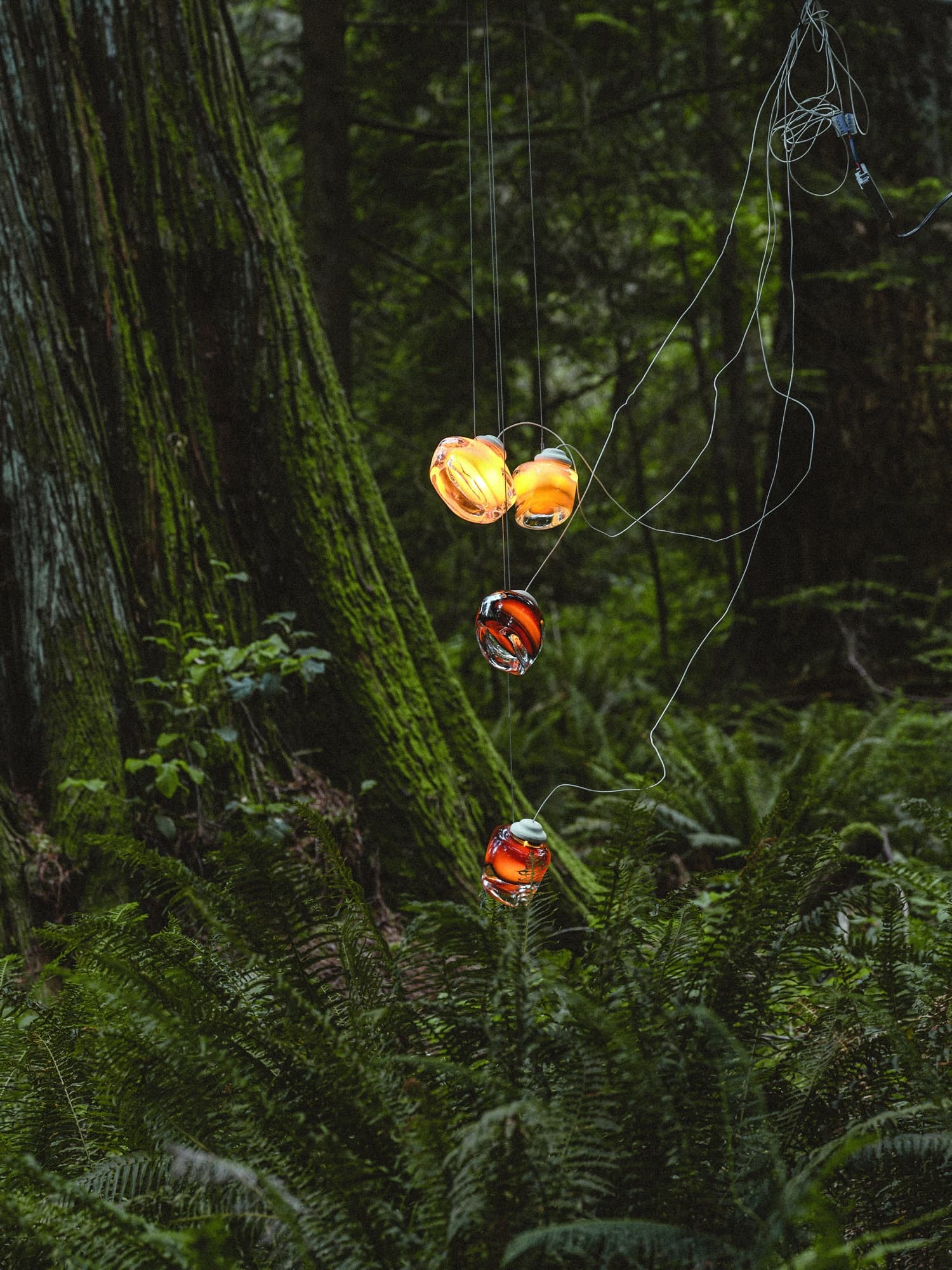
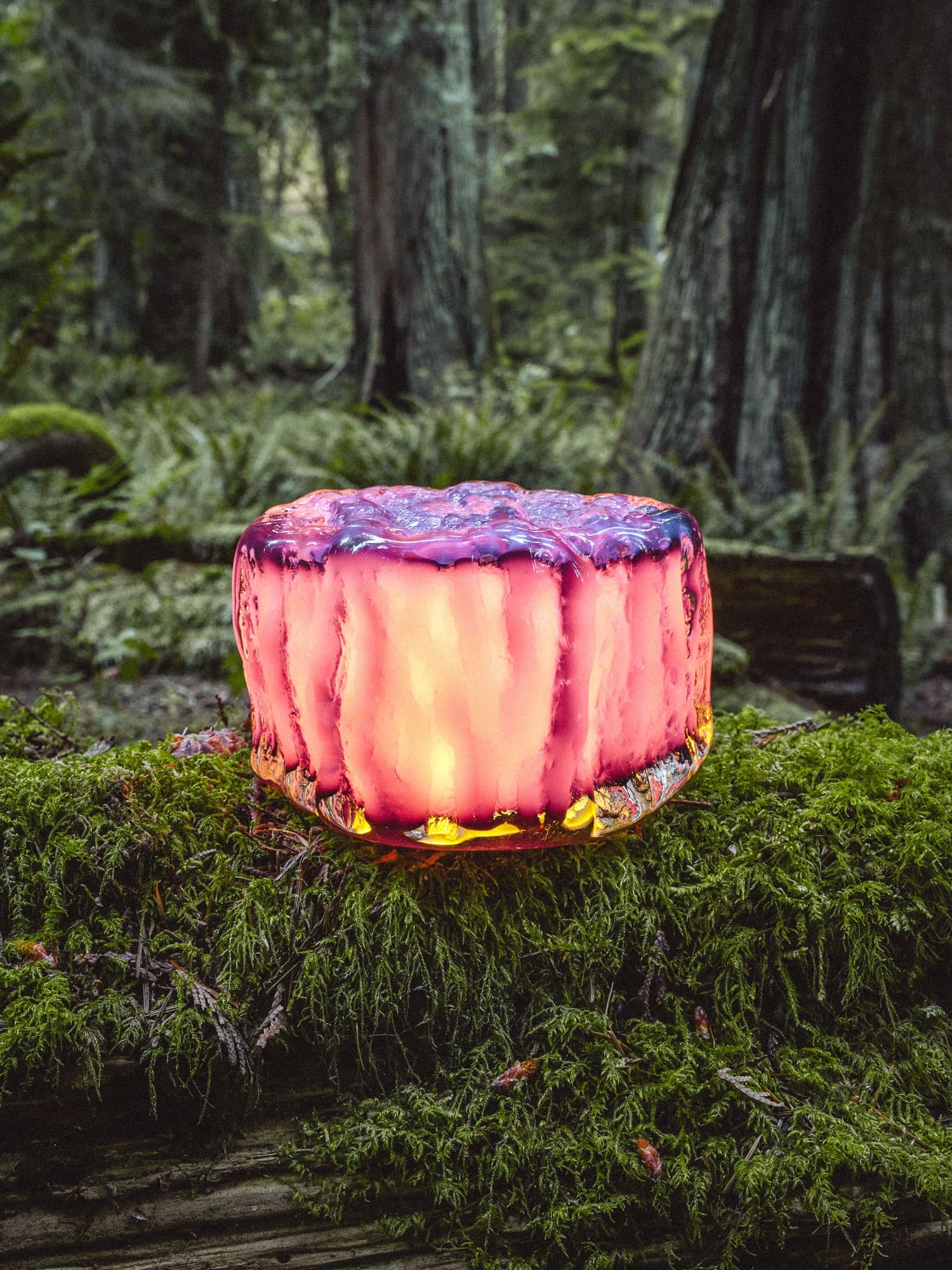
Index
Made this way